Why Do My Pipes Bang When I Turn the Water On?
If you've ever turned on a faucet and heard a loud bang, thump, knocking, or hammering sound coming from your walls or ceiling, you're not alone. Many homeowners experience this issue, especially in older homes, but it can happen in newer plumbing systems as well.
While an occasional noise may not seem like a major concern, persistent banging pipes can indicate excessive water pressure, loose piping, or a plumbing issue that should be addressed before it causes damage.
In this blog, we'll explain the most common causes of banging pipes, whether the problem is dangerous, and what can be done to fix it.
What Causes Pipes to Bang?
Water piping is designed to carry water quietly throughout your home. When everything is functioning properly, you shouldn't hear loud banging or knocking sounds every time you turn on a faucet, flush a toilet, or run your washing machine. If you do, there's usually an underlying cause.
- Water Hammer
The most common cause of banging pipes is water hammer.
Water traveling through your plumbing system has momentum. When a valve suddenly opens or closes, such as a washing machine, dishwasher, ice maker, or even certain fixtures, the moving water has nowhere to go.
Instead of stopping gradually, it creates a pressure shock wave that travels through the piping system. That pressure wave causes pipes to vibrate and strike nearby framing, creating the familiar BANG!
Common signs include:
• Loud banging after shutting off a faucet
• Knocking after the washing machine fills
• Noise after flushing a toilet
• Pipes vibrating inside walls
Repeated water hammer places stress on:
• Pipe joints
• Copper solder connections
• PEX fittings
• Valves
• Water heaters
• Appliances
Over time, those repeated pressure surges can contribute to leaks or premature plumbing failures.
2. Loose Pipe Supports
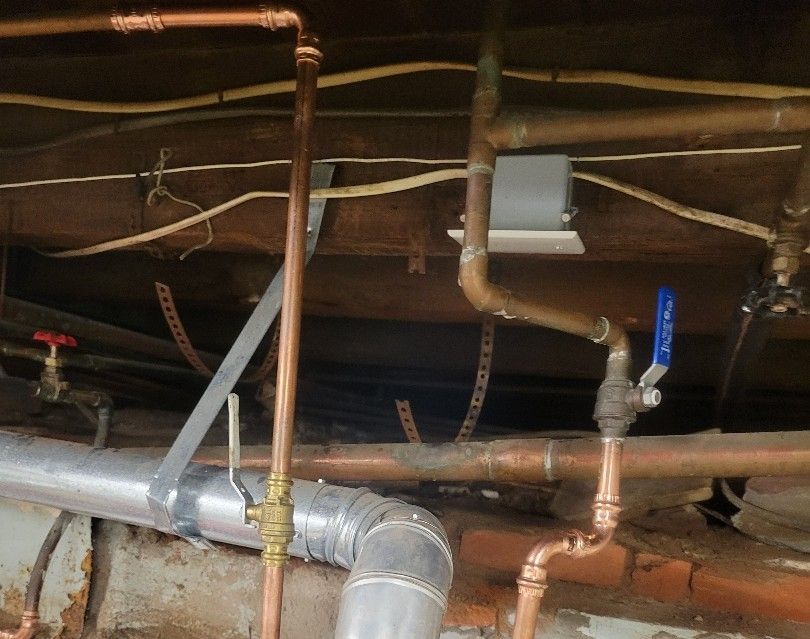
Every plumbing system relies on pipe straps, clamps, and hangers to keep water lines securely in place. As a home ages, these supports can loosen or deteriorate. When water begins flowing, the pipe moves slightly. Without proper support, it can repeatedly strike:
• Floor joists
• Wall studs
• Ceiling framing
• HVAC ductwork
This often produces a knocking sound that seems to travel through the house.
3. High Water Pressure
Many homeowners have no idea their water pressure is too high. While high pressure may make showers feel stronger, it also places unnecessary stress on your entire plumbing system.
High water pressure can contribute to:
• Banging pipes
• Leaks
• Running toilets
• Dripping faucets
• Premature water heater failure
• Appliance damage
Ideally, residential water pressure should generally fall between 50 and 70 PSI. If pressure is consistently much higher, a pressure reducing valve (PRV) may need adjustment or replacement.
4. Worn Water Hammer Arrestors
Many homes have small devices called water hammer arrestors installed near quick-closing valves. These devices contain an air cushion that absorbs sudden pressure changes. Over time, they can wear out or lose effectiveness. When that happens, the loud banging returns. Replacing an arrestor is often much less expensive than repairing water damage caused by repeated pressure surges.
5. Thermal Expansion
Another cause that many homeowners overlook is thermal expansion. As hot water travels through copper piping, the pipe expands slightly. When it cools, it contracts. If pipes pass tightly through framing or aren't properly isolated, they may rub against wood or metal, producing ticking, popping, or knocking sounds.
Can Banging Damage My Home?
Yes. While one loud bang isn't likely to cause immediate damage, repeated movement over months or years can result in:
• Loose fittings
• Pipe leaks
• Damaged drywall
• Water stains
• Mold growth
• Costly repairs
Early diagnosis is almost always less expensive than repairing water damage after a pipe begins leaking.
Can I Fix It Myself?
Some simple issues, such as tightening an accessible pipe strap, may be manageable for a homeowner. However, identifying the true cause often requires experience. Replacing the wrong part won't solve the problem if the issue is excessive water pressure or a failing pressure reducing valve. A professional plumbing inspection can identify the root cause and recommend the proper repair.
How Aqua Plumbing & Heating, LLC., Can Help
At Aqua Plumbing & Heating, LLC., our licensed technicians diagnose noisy plumbing systems throughout Philadelphia and the surrounding areas. Our inspection may include:
• Water pressure testing
• Inspection of pipe supports
• Evaluation of water hammer arrestors
• Inspection of pressure reducing valves
• Identification of loose piping
• Recommendation for permanent repairs
Our goal is to eliminate the noise while helping protect your plumbing system from future damage.
When Should You Call a Plumber?
If your pipes bang every time you:
• Turn on a faucet
• Flush a toilet
• Use the washing machine
• Run the dishwasher
• Use hot water
It's a good idea to have your plumbing system inspected before the issue worsens. Ignoring the problem could eventually result in leaks, damaged piping, or costly repairs.
Schedule Your Plumbing Inspection Today!
Don't ignore noisy pipes.
If you've been hearing banging, knocking, or hammering sounds while using water in your home, Aqua Plumbing & Heating, LLC., is here to help.
We'll identify the source of the problem, explain your options, and recommend the most effective solution.
Call Aqua Plumbing & Heating, LLC., today!