Why is My AC Leaking Water? 5 Common Causes and What to Do
There's nothing worse than noticing a puddle of water on the floor. While a leaking AC unit may seem like a minor issue, it's often a sign that something isn't working properly. If left unaddressed, even a small leak can lead to water damage, mold growth, and costly repairs.
Here are five of the most common reasons your air conditioner may be leaking water and what you should do about it.
- Clogged Condensate Drain Line
The most common cause of an AC water leak is a clogged condensate drain line. As you air conditioner cools your home, it removes moisture from the air. That moisture collects in a drain pan and flows through the condensate drain line to the outside or into a drain. Over time, dirt, algae, mold, and debris can clog the drain line, causing water to back up and overflow.
Signs:
• Water pooling around the indoor unit
• Musty odors
• High indoor humidity
• Water stains near the air filter
What to do: Contact Aqua Plumbing & Heating, LLC., to inspect and clear the drain line before the blockage causes additional damage.
2. Disconnected or Damaged Condensate Drain Pipe
Sometimes the drain line isn't clogged, it's simply become disconnected or damaged. A loose fitting, cracked pipe, or separated connection allows water to drip directly into the floor instead of flowing through the drain. At Aqua Plumbing & Heating, LLC., we recently repaired a system where a disconnected condensate drain was allowing water to drip onto the homeowner's carpet. After replacing the damaged section with new PVC piping and fittings, the system was draining properly again.
What to do: Have the damaged section repaired or replaced to restore proper drainage.
3. Dirty Air Filter
Believe it or not, a dirty air filter can also cause a leak. When airflow is restricted, the evaporator coil becomes too cold and can freeze. Once the ice melts, the drain pan may not be able to handle the excess water, resulting in leaks.
To help prevent this:
• Check your air filter every month
• Replace it every 30-90 days, depending on usage and manufacturer recommendations.
A clean filter not only helps prevent leaks but also improves your system's efficiency.
4. Damaged or Rusted Drain Pan
Older HVAC systems may develop rust or cracks in the condensate drain pan. When this happens, water leaks directly through the damaged pan instead of entering the drain line.
Warning signs include:
• Water dripping from beneath the unit
• Visible rust
• Corrosion around the drain pan
Depending on the age of the system, the drain pan may be repairable or need replacement.
5. Low Refrigerant Levels
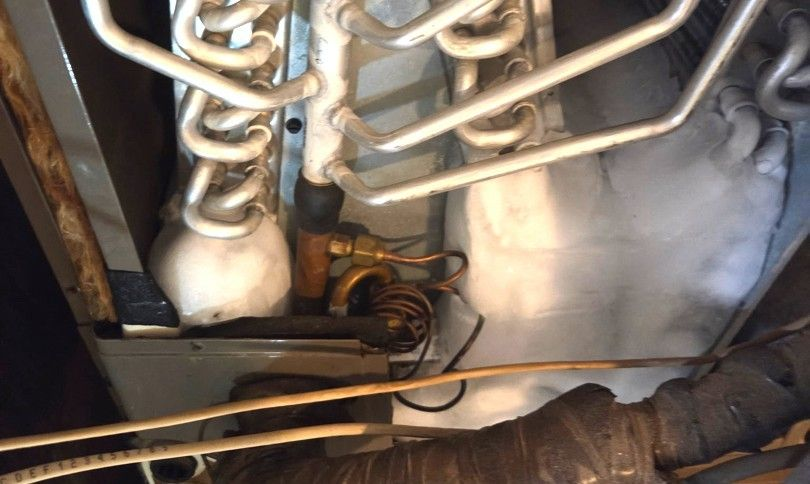
Low refrigerant can cause the evaporator coil to freeze. As the ice melts, excess water may overwhelm the drainage system and leak onto the floor.
Other signs of low refrigerant include:
• Warm air coming from your vents
• Ice on refrigerant lines
• Longer cooling cycles
• Higher electric bills
Lower refrigerant should always be diagnosed and repaired by a professional HVAC technician.
What Should You Do If Your AC is Leaking?
If you notice water around your air conditioner:
• Turn off the system if the leak is significant
• Check your air filter and replace if it's dirty
• Avoid using the unit until the source of the leak has been identified
• Contact Aqua Plumbing & Heating, LLC., for an inspection
Ignoring the problem can result in damage to flooring, drywall, insulation, and even mold growth.
Don't ignore a small leak! The sooner the problem is addressed, the less likely it is to turn into an expensive repair.